
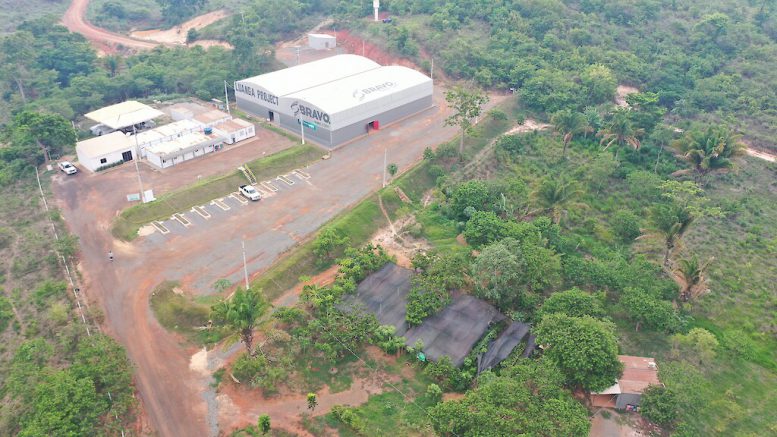
A new economic study for Bravo Mining’s (TSXV: BRVO: US-OTC: BRVMF) Luanga polymetallic project in Brazil has lifted the proposed mine’s after-tax net present value (NPV) 16% over a previous analysis to $1.45 billion (C$2 billion), even with higher pre-production capital due to the inclusion of a smelter.
Based on an 8% discount rate, Luanga now carries a 35% after-tax internal rate of return (IRR) and a two-year payback period, Bravo reported Tuesday in its new prefeasibility study. Last year’s preliminary economic assessment (PEA) had outlined a $1.25 billion NPV, a 49% IRR and a 2.4-year payback.
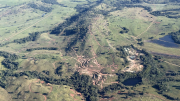
Toronto-based Bravo is proposing to develop Luanga – its sole project – as a vertically integrated operation with an open-pit mine and concentrator in the Carajás mineral province and a smelter about 600 km away at the Barcarena Export Processing Zone, or ZPE. Locating the smelter inside the ZPE will provide fiscal and customs benefits, including an estimated $90 million reduction in smelter capital and $41.20 per tonne in operating-cost savings, Bravo says.
Releasing the study will allow Bravo to apply for an installation licence, “which paves the way for project construction but not for operations,” BMO Capital Markets analysts Frederic Bolton and Raj Ray said Tuesday in a note. “Crucially, the prefeasibility study now incorporates the pyrometallurgical facility, which drives improved payable metal assumptions.”
Including the new smelter, the study’s base case pegs pre-production capital for Luanga at about $785 million, compared with a $496 million estimate in the PEA. Sustaining capital over the mine life is projected to be about $98 million.
Tuesday’s study “validates the strategy we have been advancing for more than two years: to vertically integrate Luanga in Brazil,” Chairman and CEO Luis Azevedo said in the statement. “The project’s strong economics, together with the benefits available within the Barcarena ZPE, more than offset the additional capital required for the smelter.”
The new study underscores Luanga’s value as one of the few large, advanced platinum group metals projects outside the industry’s dominant producing regions of South Africa and Russia. Its polymetallic profile could give Brazil a new source of critical minerals while Bravo’s proposed domestic smelter would retain more of their value in the country.
Longer life
Located in Para state, about 1,800 km north of Sao Paulo, Luanga holds 86.7 million tonnes in proven and probable reserves grading 0.94 gram palladium per tonne, 0.68 gram platinum, 0.11 gram rhodium, 0.07 gram gold and 0.17% nickel, according to the new reserve estimate. That translates into 2.6 million oz. contained palladium, 1.9 million oz. platinum, 295,000 oz. rhodium, 205,000 oz. gold and 154,476 tonnes nickel.
The estimate excludes 22,100 metres of 2026 infill and expansion drilling. Bravo is targeting an updated resource in the first quarter of 2027, potentially providing material for a longer mine life, Azevedo said.
Bravo’s base case assumes a 9.6-year mine life, with about 8.7 million tonnes processed annually and a peak throughput of about 10 million tonnes.
Average annual payable production is forecast at about 393,800 oz. of palladium, platinum, rhodium and gold, along with 9,800 tonnes of nickel. Over the mine life, the smelter would also produce about 878,000 tonnes of sulphuric acid, which would be sold to fertilizer producers.
Key assumptions underpinning the study include $1,245 per oz. for palladium, $1,700 per oz. for platinum, $8,000 per oz. for rhodium, $3,500 per oz. for gold and $17,000 per tonne for nickel.
Jameson Cell
Luanga is expected to generate about $8.4 billion in net revenue and $4.2 billion in earnings before interest, depreciation and amortization over its life. Undiscounted free cash flow is estimated at $2.8 billion.
A key change from Bravo’s 2025 PEA is the move to Jameson Cell flotation technology, following additional metallurgical testing. The new study assumes a recovery of about 100 grams of platinum group metals plus gold concentrate, compared with 80 grams previously. Recoveries are estimated at about 82% for palladium, 80% for platinum, 55% for rhodium, 88% for gold and 70.6% for nickel.
After receiving its preliminary licence in March 2025, Bravo plans to submit its installation-licence application in this year’s fourth quarter. The company had about $94.1 million in cash at June 30, which management says is sufficient to fund the resource update, definitive feasibility study and work toward a final investment decision.
In addition to advancing Luanga, Bravo is also exploring for copper and other mineralization in the Carajás region. Azevedo and his executive team have experience in Brazilian mining, platinum group metals exploration, permitting, financing, construction and operations.
Bravo shares fell 1.5% to C$3.21 Tuesday morning in Toronto, valuing the company at about C$440 million ($314 million). The stock has traded between C$2.17 and C$5.52 in the past year.
Be the first to comment on "Value rises to $1.45B for Bravo’s PGM project in Brazil"