

Gold’s March selloff is being driven by a global liquidity squeeze and disrupted reserve flows, not weakening fundamentals, according to Sprott strategist Paul Wong.
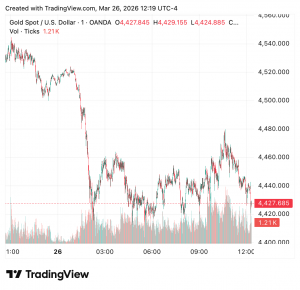
Prices have fallen to about $4,400 per oz. from a peak of $5,589.38 in late January, catching investors off guard amid geopolitical tensions, energy disruptions and rising volatility. In a note on Thursday, Wong argues the drop reflects a broad cash-raising event as financial conditions tighten, rather than a breakdown in gold’s role as a hedge.
He traces the shift to 2022, when the freezing of Russia’s foreign exchange reserves accelerated a move by sovereign buyers away from United States Treasuries and toward gold. That change tied gold more closely to reserve accumulation flows, particularly those linked to commodity revenues, leaving prices more sensitive when those inflows weaken.
The closure of the Strait of Hormuz during the Iran-linked conflict has intensified that pressure by disrupting roughly 20% of global oil shipments. Gulf Cooperation Council countries, key reserve accumulators, have seen energy revenues stall, halting gold purchases and in some cases forcing drawdowns. The loss of incremental demand has weighed on prices.
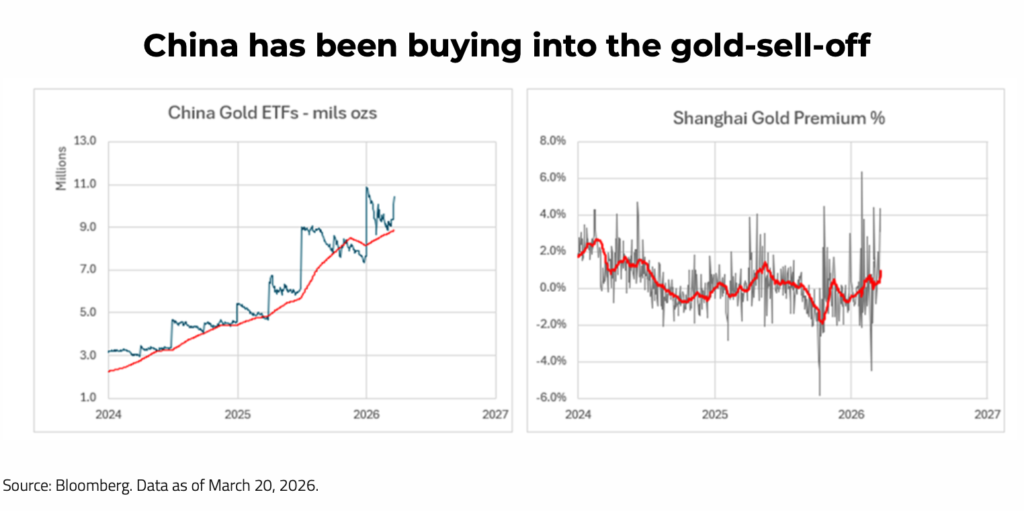
Higher oil prices have also strained trade balances across Asia, reducing surplus reserves that might otherwise support gold demand. China stands out as an exception, with exchange-traded fund inflows rising and Shanghai premiums reaching 4.4% above London spot prices, signalling firm domestic buying.
Wong says the speed of the decline is rooted in investment flows. Rising volatility across equities, foreign exchange and rates triggered widespread deleveraging among hedge funds, systematic strategies and leveraged portfolios. In that environment, gold’s liquidity made it a ready source of cash.
Further pressure
Additional pressure came from the unwinding of short U.S. dollar trades, systematic reductions in gold exposure tied to higher rates and a stronger dollar, and capital rotating into energy markets. Options positioning and volatility-driven strategies amplified short-term swings.
Wong compares the episode to 2008 and 2020, when gold initially fell during acute stress before rebounding as policy support emerged. He says tightening financial conditions and rising systemic strain now point toward a similar setup, with potential for renewed monetary intervention.
Sprott maintains that gold’s longer-term outlook remains intact, supported by structural forces such as energy scarcity, fiscal expansion and the gradual erosion of the dollar-centric reserve system. A further deterioration in economic conditions could increase the likelihood of renewed quantitative easing, providing a catalyst for the next rally.
Silver has been even more volatile, dropping to around $65 after topping $121 per ounce in February, with price action driven largely by derivatives and market structure rather than fundamentals.
The recent decline represents a liquidity-driven reset, leaving gold positioned to move higher once financial conditions stabilize, Wong says.



Be the first to comment on "Gold slump tied to crunch, not fundamentals: Sprott"