
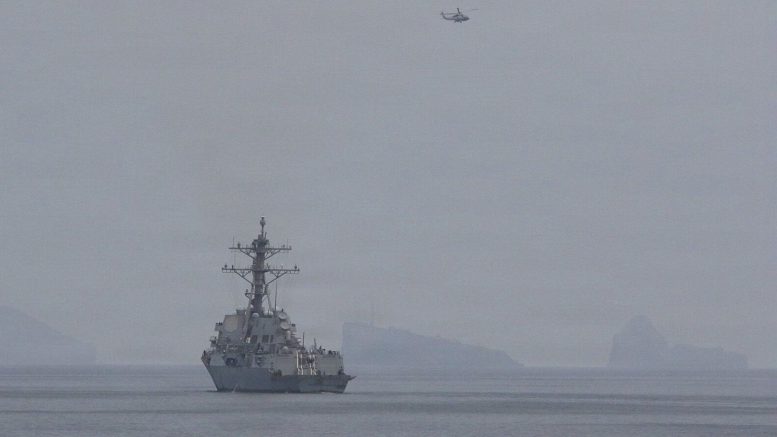
Ivanhoe Mines (TSX: IVN) founder and co-chairman Robert Friedland is warning that a prolonged closure Strait of Hormuz would have a “profound” effect on global supply chains, hobbling copper producers by driving up sulphur and sulphuric acid prices and causing shortages.
About 20% of global copper supply relies on a process that uses sulphuric acid to leach copper from oxide ores. With about 50% of the global seaborne sulphur supply cut off, “sulphur and sulphuric acid markets are becoming extremely tight,” according to Friedland.
“If the closure of the Strait of Hormuz continues, we are especially concerned about the availability of precursor materials necessary for the mining industry to continue operating,” Friedland said Monday in Ivanhoe’s first-quarter production report. “A second-derivative effect will be on global copper production due to the shortage of the world’s most important industrial chemical, sulphuric acid.”
Critical chokepoint
The Strait of Hormuz is a critical chokepoint for shipments of sulphur — the key input for sulphuric acid — from the Middle East, which usually accounts for over 40% of global exports. Disruptions have curtailed shipments of sulphur with downstream implications for copper processing and other metals that rely on acid leaching.
To make matters worse, recent industry reports say China, the world’s second largest exporter of sulphuric acid after Japan, will ban sulphuric acid exports starting May 1. The ban applies to sulfuric acid that’s a by-product of copper and zinc smelting in China, the reports say.
Asia’s biggest economy exported about 2.7 million tonnes of sulphuric acid annually, according to Traubenbach Associates data cited by Red Cloud Securities. Chile was the largest destination of Chinese sulphuric acid, according to BMO Capital Markets.
Phosphate fertilizer makers are the biggest consumers of sulphuric acid, accounting for 54% of 2024 demand, Traubenbach Associates data show. This compares with 12% for chemical manufacturing and 10% for metal processing and mining.
Copper smelting makes up the biggest slice of metals and mining demand, accounting for 62 million tonnes of the sector’s 89-million tonne consumption, the data also show.
The Chinese export ban “will result in a significant shift in costs for the agricultural sector and certain copper and nickel users. Overall, copper will be hit the hardest”, Red Cloud Securities commodities strategist Kenneth Hoffmann said in a note published Monday.
Rising prices
Realized prices for sulphuric acid have risen past $500 a tonne in recent weeks amid supply constraints, Ivanhoe said March 31. A continued closure of Strait of Hormuz could drive further increases, the company said at the time.
Ivanhoe’s Kamoa-Kakula copper complex in the Democratic Republic of Congo — which houses Africa’s largest copper smelter — plays an increasingly strategic role in the current market environment.
The operation can produce its own sulphuric acid as a by-product of copper smelting, reducing reliance on imported acid that has been affected by global supply disruptions. It also sells the acid to oxide copper mining operations elsewhere in the DRC’s copper belt.
The smelter produced 117,871 tonnes of high-strength sulphuric acid in the first quarter, Ivanhoe said.
“Kamoa-Kakula is ideally positioned as a producer and seller, and therefore not a consumer, of sulphuric acid,” Friedland said. “Our industrial process does not require sulphuric acid to produce 99.7%-pure copper anodes.”
The revenue generated by sales of sulphuric acid represents “a strategic advantage given global supply chain disruptions caused by the Strait of Hormuz closure,” RBC Capital Markets mining analyst Sam Crittenden said Monday in a note.
Even so, Ivanhoe said Monday it has drawn up contingency plans across its operating sites to sustain operations during the U.S.-led war on Iran. The moves include making advanced diesel purchases.
Quarterly output
The announcement came as Ivanhoe reported first-quarter production of 71,417 tonnes of copper in anode from Kamoa-Kakula as ramp-up and recovery efforts continue following prior operational disruptions. The total includes 63,671 tonnes of copper in anode produced by the smelter and 7,746 tonnes of copper in blister produced by the Lualaba smelter in Kolwezi.
In a surprise move that reset investor expectations, Ivanhoe two weeks ago slashed its near-term production guidance for Kamoa-Kakula.
Ivanhoe now expects 2026 copper anode output of 290,000 to 330,000 tonnes, down from 380,000 to 420,000 tonnes, while 2027 production will reach 380,000 to 420,000 tonnes versus a prior target of 500,000 to 540,000 tonnes, according to a March 31 statement.
Annual production at Kamoa-Kakula should reach 500,000 tonnes from 2028 onwards, Ivanhoe has also forecast.
Kamoa-Kakula is one of the world’s highest-grade and fastest-growing copper operations. It holds about 1.3 billion tonnes grading 2.65% copper for contained metal of about 34 million tonnes of metal, underpinning a multi-decade mine life, according to a resource released last month.
Ivanhoe rose 2.8% to C$11.82 late Monday morning in Toronto, giving the company a market value of about C$17 billion ($12 billion). The stock has traded between C$8.76 and C$20.34 in the past year.
Be the first to comment on "Prolonged Hormuz Strait closure would have ‘profound’ impact on mining: Friedland"