
This editorial appeared in The Northern Miner’s October print edition, which features a special focus on Quebec’s mining industry. As the province pursues new mines and mineral-processing plants, we examine a growing constraint on those ambitions: access to electricity. Explore the full Quebec coverage in our digital edition.
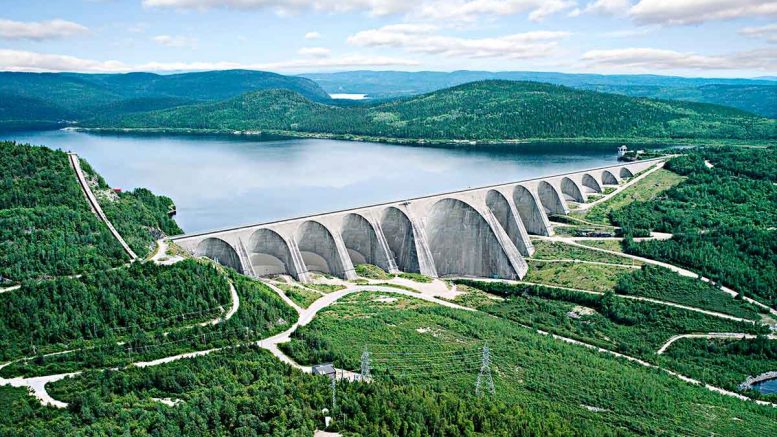
Quebec has spent generations turning abundant hydroelectric power into one of its greatest industrial advantages.
The province dammed vast northern rivers, built one of the world’s largest electricity systems and used cheap, renewable power to attract aluminum smelters, manufacturers, mines and, more recently, battery-material plants.
Now it has begun rationing that power.
Any new industrial project requiring 5 MW or more, or an existing operation seeking that much additional load, needs government authorization before it can connect to the grid. Applicants are compared according to the economic, social and environmental benefits they would produce.
That’s a remarkable reversal for a province where abundant electricity has long been treated almost like another mineral resource.
It also presents a new complication for Quebec’s mining ambitions. The province has more than 1,100 exploration projects and more than 50 mining projects that have reached the development stage, according to the province’s new minerals strategy issued in January. Private mining investment totalled $6.2 billion (US$4.4 billion) in 2024.
We all know deposits don’t become mines simply because the geology works and capital is available. They need roads, permits, workers and, increasingly, a place in the electricity queue.
A scarce advantage
The problem isn’t that Quebec has run out of electricity. Demand is growing faster than the system built for an earlier era.
Quebec is electrifying transportation and buildings while trying to attract industries that consume enormous amounts of power. Mines, concentrators and processing plants are competing for new supply alongside factories, battery-material plants, hydrogen projects and data centres.
As of March 31, the government had authorized about 1,500 MW for 30 industrial electricity blocks since the allocation system began in 2023, although several projects were later cancelled. The recipients include Quebec Iron Ore, Agnico Eagle Mines and Nouveau Monde Graphite alongside manufacturers and other industrial users.
Even data centres, which account for about 200 MW of peak demand, could approach 1,000 MW by 2035, Hydro-Québec said in a February update.
The utility estimates the province will need about 60 TWh more electricity by 2035. Its response is on a scale Quebec hasn’t seen in decades: 11,000 MW of additional generating capacity, 5,000 km of new transmission lines and total investments of about $200 billion by 2035 under its action plan.
Those numbers show why power allocation has become necessary. They also change the calculation for resource development.
Quebec’s new minerals strategy seeks to build complete supply chains, not simply dig ore and ship it elsewhere. The province wants more processing of lithium, graphite, nickel and other minerals at home.
That’s where electricity demand compounds. Mining the resource requires power. Concentrating and processing it require more. Turning those minerals into higher-value products can require more still.
Quebec’s own strategy acknowledges the constraint. It identifies access to energy, along with roads, railways, ports and telecommunications, as a strategic consideration for mining projects, particularly in the north.
Price of ambition
We can’t help but notice a bit of irony here. Quebec’s abundant electricity helped make it a prime region for the very industries now putting pressure on the grid. The province has also committed to decarbonization, which means replacing fossil fuels with electricity wherever practical.
These signs of success have created the scarcity. For mining, that means one of Quebec’s traditional advantages can no longer be taken for granted.
Building enough generating capacity and transmission to satisfy every new user would be enormously expensive. Hydro-Québec sees conservation as part of the answer. It plans to spend $10 billion on energy efficiency by 2035, with a goal of freeing up 3,500 MW, and says energy efficiency costs about one-third as much as obtaining electricity from other sources.
Even then, some rationing is likely to remain.
Quebec’s allocation system already points towards how that might work. Applicants for 5 MW or more are expected to show how they will conserve energy, recover waste heat and consider other sources or self-generation.
Mining has a strong case to make when Quebec weighs the wider economic return from scarce power. A mine can operate for decades, sustain well-paid jobs in regions with few comparable employers, buy heavily from local suppliers, generate taxes and exports and provide feedstock for processors Quebec wants to attract. The economic activity doesn’t stop at the mine gate.
That distinguishes mining from some other electricity-intensive users whose enormous power requirements may support relatively small permanent workforces or create fewer local supply-chain benefits. Not every mine will outperform every factory, data centre or hydrogen plant. But a megawatt feeding a long-life mine can generate economic benefits far beyond the value of the electricity consumed.
Quebec therefore faces a three-part challenge: expand the grid where the economics make sense, squeeze considerably more from the system it already has and make sure scarce power produces as much lasting economic value as possible.
Quebec still has the rivers. The question now is what each scarce megawatt is worth.



Be the first to comment on "Editorial: Quebec’s new power rationing"