
Underground mining operations are facing increased scrutiny over diesel emissisons as regulators tighten exposure limits and mines push deeper below surface. With air quality now closely linked to worker safety, productivity and regulatory compliance, operators are being forced to reassess how they manage diesel-powered equipment.
The Northern Miner video host Devan Murugan speaks with Holden Bunko of Mammoth Equipment & Exhausts about how evolving diesel particulate matter standards are shaping ventilation strategies, the role of equipment retrofits, and the operational challenges mines face.
Devan Murugan: Holden, thanks for talking with us.
Holden Bunko: Good to be here.
DM: What is the big shift you are seeing around air quality and worker exposure standards?
HB: The biggest shift we’re seeing right now is increased global pressure around worker safety. As mines push deeper underground and operations become more mechanized, air quality becomes a major concern, particularly in underground environments where airflow is limited.
In Canada, new targets were introduced in 2023 that specifically address diesel particulate matter, or DPM. DPM is a component of exhaust produced by diesel-powered equipment. Through filtration and emissions control systems, it is possible to significantly reduce the amount of DPM present in underground air.
DPM exposure is measured in milligrams or micrograms per cubic meter. Ontario currently leads Canada, with limits set at approximately 0.12 milligrams per cubic metre, or 120 micrograms. Globally, however, restrictions are tightening further. In Australia, for example, proposed limits could reduce allowable exposure to as low as 0.01 milligrams, or 10 micrograms per cubic metre.
Overall, this reflects a growing and sustained focus on worker health and air quality, which has become a top priority for mining operations worldwide.
DM: Companies must consider all of these factors when deciding how to respond. What are the key pathways to cutting diesel emissions – ventilation, electrification, or retrofits – and which options are mines actually choosing right now?
HB: There are essentially three primary ways to reduce DPM levels underground. The first is ventilation, which involves increasing the amount of fresh air moving deeper into the mine. This often requires structural changes, including additional fans and upgraded air exchange systems. While effective, it can be costly because it involves altering the mine’s infrastructure.
The second option is electrification. Battery-electric equipment produces no diesel emissions, making it an attractive long-term solution. However, mining equipment represents a significant capital investment and transitioning an entire fleet takes time and planning.
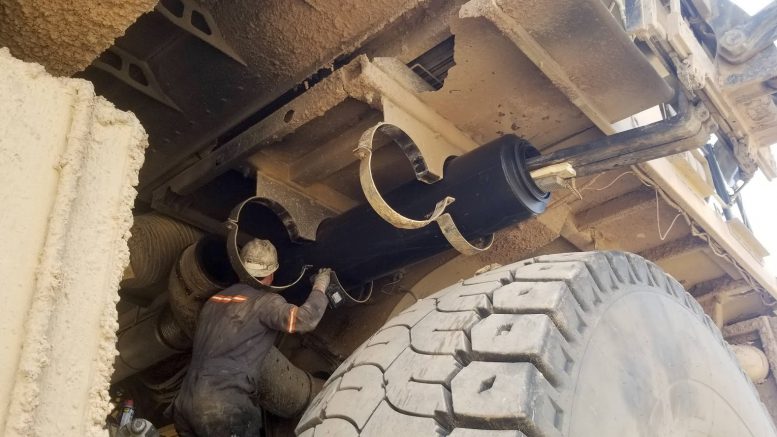
The third option is retrofitting existing diesel equipment with aftertreatment systems. This is often the fastest and most practical way for mines to meet regulatory requirements. Many machines currently in operation were acquired within the last few years, and retrofitting allows operators to reduce emissions without immediately replacing equipment or making major structural changes.
DM: Before you can fix diesel particulate exposure issues, where does a mine begin? What kind of baseline data or testing is essential?
HB: The first step is understanding current emissions levels. That means identifying output from individual machines and conducting audits to establish a baseline.
While DPM is the primary emission currently regulated, it is also important to consider other exhaust components such as hydrocarbons and nitrogen dioxide. DPM is only one part of the overall emissions profile, and improving worker health requires a broader view of emissions.
Once a baseline is established, mines can identify which machines present the highest risk and prioritize them accordingly. Working with an experienced service provider helps operators understand where they stand and how best to move forward.
DM: Australia was an early mover when it came to diesel aftertreatment in underground mines. How has that experience shaped Mammoth’s work in Canada and the United States?
HB: Mammoth recently celebrated 50 years in business, having been established in the mid-1970s. Australia has long been a global leader in mining and worker health and safety regulation and Mammoth has been involved in diesel aftertreatment there for more than two decades.
We were closely involved as regulations evolved, which allowed us to continuously improve our products and support mine operators as standards became more stringent. That experience has directly informed our work in other regions.
Since establishing operations in Canada in 2014, we’ve applied those lessons across Ontario, Quebec and throughout North America, helping mines adapt as regulations continue to tighten.
DM: Geography and climate clearly play a role. Even on the surface, Tier 4 and Stage V machines come with complex aftertreatment systems from the factory. What challenges are operators facing, particularly in colder climates?
HB: Even factory-installed aftertreatment systems require regular maintenance. Filters still need to be cleaned, and without proper upkeep, operators can experience performance issues.
In colder northern environments, those challenges can be amplified. Issues such as longer idle times, freeze-ups and crystallization can affect system performance. Heat retention is critical, as sufficient heat is required for proper regeneration of the aftertreatment system.
Tier 4 and Stage V systems are effective, but they are not maintenance-free, and climate plays a significant role in how well they perform over time.
DM: Finally, if a mine manager is reading this and wants to get ahead of emissions and heat-related issues, what does working with Mammoth actually look like on the ground?
HB: We take a hands-on, partnership-based approach. It typically starts with site visits and audits to identify key emission sources and health and safety risks. From there, we develop solutions tailored to the specific equipment, environment and operational needs of each site.
That can include retrofitting diesel particulate filters, setting up regular cleaning programs for Tier 4 and Stage V machines and establishing maintenance and replacement schedules. In colder regions, we also provide thermal solutions such as insulation blankets and freeze guards to help retain heat and support effective regeneration.
Our goal is to act as an extension of the mine’s team, managing emissions and aftertreatment performance so operators can focus on productivity and day-to-day operations.
DM: Very compelling. Thanks very much for your time.
HB: Thank you. It’s been a pleasure.
The preceding Joint Venture article is PROMOTED CONTENT sponsored by Mammoth Equipment and Exhaust and produced in co-operation with The Northern Miner. Visit: https://mammothequip.com/en-us for more information.
Be the first to comment on "Sponsored Q&A: Mammoth retrofits can disarm diesel rules "