
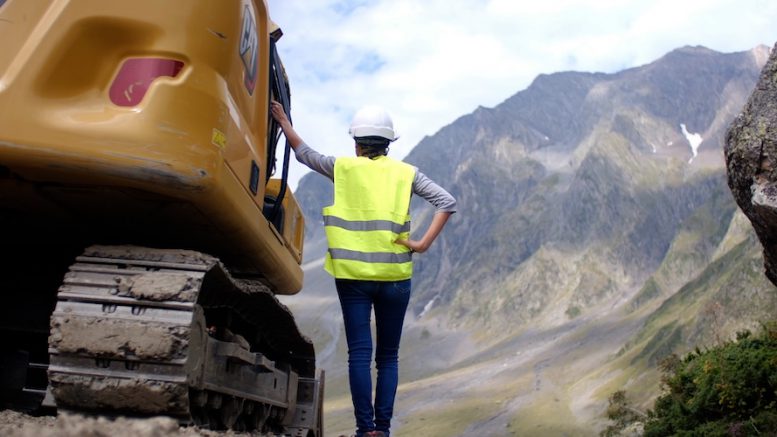
Women in Australia’s mining industry are promoted at higher rates than men but remain underrepresented in its most senior leadership positions, according to new research released Tuesday.
CEO and head-of-business roles in Australia’s mining industry remain 12% female, although women make up 23% of its workforce, the authors of Gender Equity Insights 2026: Unlocking Australia’s Workforce Potential reported.
They found that women occupied 24% of mining management positions in 2024–25. They also held 25% of senior management roles, indicating that their representation drops sharply at the highest executive levels.
“Promotion rates tell us who is taking the next step,” BCEC Director Alan Duncan, a report co-author, said in a release accompanying the research. “We also need to understand who keeps progressing through successive leadership tiers – and who stays.”
The findings highlight a leadership gap that recruitment and promotion alone may not resolve. While women in mining are advancing through management at higher rates than men, their relatively low representation in the industry’s top positions raises questions about succession planning, career development and retention.
Other jurisdictions
Australia’s female workforce share is relatively high alongside other mining jurisdictions, making the shortage at the top more striking. Women accounted for 24% of direct employees at 12 large Chilean mining companies in May 2026, according to CCM-Eleva, a Chilean mining workforce research partnership.
South Africa’s share was 21% at mining and quarrying employers with at least 50 employees, according to a 2025 government employment equity report cited by the Minerals Council South Africa, a mining employers’ association.
Canada’s mining and quarrying workforce was 17% female in 2023, according to the Mining Industry Human Resources Council, a Canadian industry workforce research and training organization.
Women held 11% of U.S. mining jobs excluding oil and gas in August 2026, preliminary U.S. Bureau of Labor Statistics data show. Different survey dates and coverage prevent a precise ranking, but the figures suggest Australia’s challenge extends beyond attracting women into the industry.
Data sources
The research was produced by the Bankwest Curtin Economics Centre (BCEC), a research institute at Curtin University in Perth, and Australia’s Workplace Gender Equality Agency (WGEA), a federal body. They drew on reports from 8,239 employers covering 5.44 million workers in 2024–25. WGEA’s reporting system covers private-sector and federal public-sector employers with at least 100 employees.
Women in mining moved from non-management into management at a rate of 0.7%, compared with 0.5% for men in 2024–25.
Among existing mining managers, women were promoted at a rate of 14%, compared with 11% for men. The difference, calculated from the unrounded figures, was 2.3 percentage points, suggesting that advancement rates alone don’t explain the industry’s leadership imbalance.
Women account for 32% of mining professionals but only 11% of technicians and trades workers, illustrating the uneven distribution of female talent across the industry’s occupational groups.
Mining’s pay divide
The report identifies mining as a significant contributor to Australia’s gender remuneration gap, reflecting both the concentration of men in the industry and differences in earnings between female and male employees.
Researchers estimated that gender concentration in mining contributed approximately A$2,950 (C$2,930) to the national annual remuneration gap, while earnings differences within the industry added another A$875. These figures represent modelled contributions to the national gap rather than individual mining workers’ pay differences.
Western Australia, the country’s major mining jurisdiction, recorded a full-time total remuneration gender pay gap of 29% in 2024–25, down from 32% in 2020–21 but still considerably higher than the national average of 21%. These figures cover all industries, rather than mining alone.
The study also linked greater female representation in corporate leadership with stronger financial outcomes among ASX-listed companies across multiple industries.
Companies in the highest quarter for women’s board representation ranked among their industry’s strongest business performers in 28% of annual observations, compared with 18% for those in the lowest quarter. Strong performance meant placing in the industry’s top quarter on at least three of six financial measures.
The researchers also associated the appointment of a female CEO or head of business with approximately A$119 million in additional market value for a company with median assets of about A$719 million.
Those findings establish associations rather than proving that appointing women directly improves financial performance.
Flexibility barriers
The report identifies limited access to flexible management positions as another obstacle to retaining experienced women, particularly as employees take on caring responsibilities.
More than 90% of Australian organizations offered flexible start and finish times in 2024–25, while 86% provided part-time work. Yet only 13% had designed management roles that could be performed part-time.
“Offering part-time work is very different from designing senior jobs that can actually be done part-time,” BCEC Senior Research Fellow Silvia Salazar, a report co-author, said in the release.
Female managers across Australian industries resigned at a rate of 14%, compared with 12% for men, potentially undermining gains achieved through recruitment and promotion. The report doesn’t provide a separate mining resignation rate.
Only 11% of employers had targets to increase men’s use of parental leave, highlighting the uneven distribution of caring responsibilities that can interrupt career progression.
“If flexibility disappears as people move up the organisation, employers risk narrowing their leadership pipeline just as experienced workers are ready to progress,” Salazar said.
Recommendations
The report outlines 12 recommendations for employers, including monitoring recruitment and promotion outcomes, addressing remuneration disparities and creating clearer pathways into senior operational and financial positions.
It also calls for companies to consider part-time or job-sharing arrangements when designing management vacancies and to assess whether flexible work affects employees’ promotion prospects.
Employers needed to look beyond recruitment and examine where workers were being lost along their career paths, WGEA CEO Christine Castley said.
“Good workforce data can show employers where talent is progressing, where it is being lost and where they may be overlooking capability they already have,” Castley said in the release.
Be the first to comment on "Women hold just 12% of top Australian mining jobs"