

The second instalment of our U.S. exploration spotlight features four juniors testing whether early drill results point to deposits with room to grow. In Arizona, Prismo Metals is looking beneath an old silver camp for a copper system. Relevant Gold is testing two targets in Wyoming, Ridgeline Minerals is tracing a silver-rich discovery in Nevada and Tectonic Metals is working towards an initial gold resource in Alaska.
Prismo Metals
Prismo Metals (CSE: PRIZ; US-OTC: PMOMF) is testing whether its historical Silver King silver project, about 110 km east of Phoenix, sits above a concealed porphyry copper system.
Mapping expanded the alteration footprint to about 2.1 by 2.4 km, Prismo reported in September. The core of potassic alteration, which can occur in the hotter central parts of porphyry systems, more than doubled to about 650 by 300 metres. The company used mapping, sampling, geophysics and initial drilling to refine its model.
Drill hole SK-26-08 cut 21.5 metres grading 0.4 gram gold per tonne, 94 grams silver, 0.28% copper and 0.21% lead from 47.3 metres depth, Prismo reported in June. The next test is whether the silver veins and breccias connect to a larger copper system below the old workings.
Silver King produced nearly 6 million oz. of silver between 1875 and 1889, and another 230,999 oz. between 1918 and 1928. Prismo optioned the project in 2025. It also has an indirect interest in Arizona’s Hot Breccia copper project through its 24% stake in Blade Resources (CSE: AZCU). Vizsla Silver (TSX: VZLA; NYSE-A: VZLA) holds a 5% stake in Prismo.
Prismo Metals had a market value of about C$5 million at print time.
Relevant Gold
Relevant Gold (TSXV: RGC; US-OTC: RGCCF) is drilling Bradley Peak and Lewiston in central Wyoming to test whether a little-explored belt of Archean rocks can host a gold district.
The company started a 5,000- to 7,000-metre drill program in July at Bradley Peak, about 218 km northwest of Cheyenne, after receiving an expanded five-year exploration permit from the U.S. Bureau of Land Management. Work initially focused on Apex, one of six prospects at Bradley Peak and the only one drilled before this year.
All 12 drill holes in last year’s Apex program intersected anomalous gold over about 600 metres of strike, although grades were low and intervals narrow. This year’s work is testing whether those structures persist and host higher-grade shoots. The company’s model draws on Archean gold camps in Canada, where large deposits can be associated with deep crustal structures.
Relevant began another 5,000-metre drill program in August at the Burr target on its Lewiston project in the historical South Pass gold camp. Kinross Gold (TSX: K; NYSE: KGC) and investors William Bollinger and Rob McEwen participated in a C$15-million financing this year. Neither Wyoming project has a resource estimate.
Relevant Gold had a market value of about C$49 million at print time.
Ridgeline Minerals
Ridgeline Minerals (TSXV: RDG; US-OTC: RDGMF) sold four Nevada gold properties to Nevada Gold Mines for $23.2 million in cash in August. The sale gives Ridgeline capital to pursue early discoveries, while South32 (ASX, LSE, JSE: S32) funds exploration at the Selena silver-zinc-lead-gold project under an earn-in agreement.
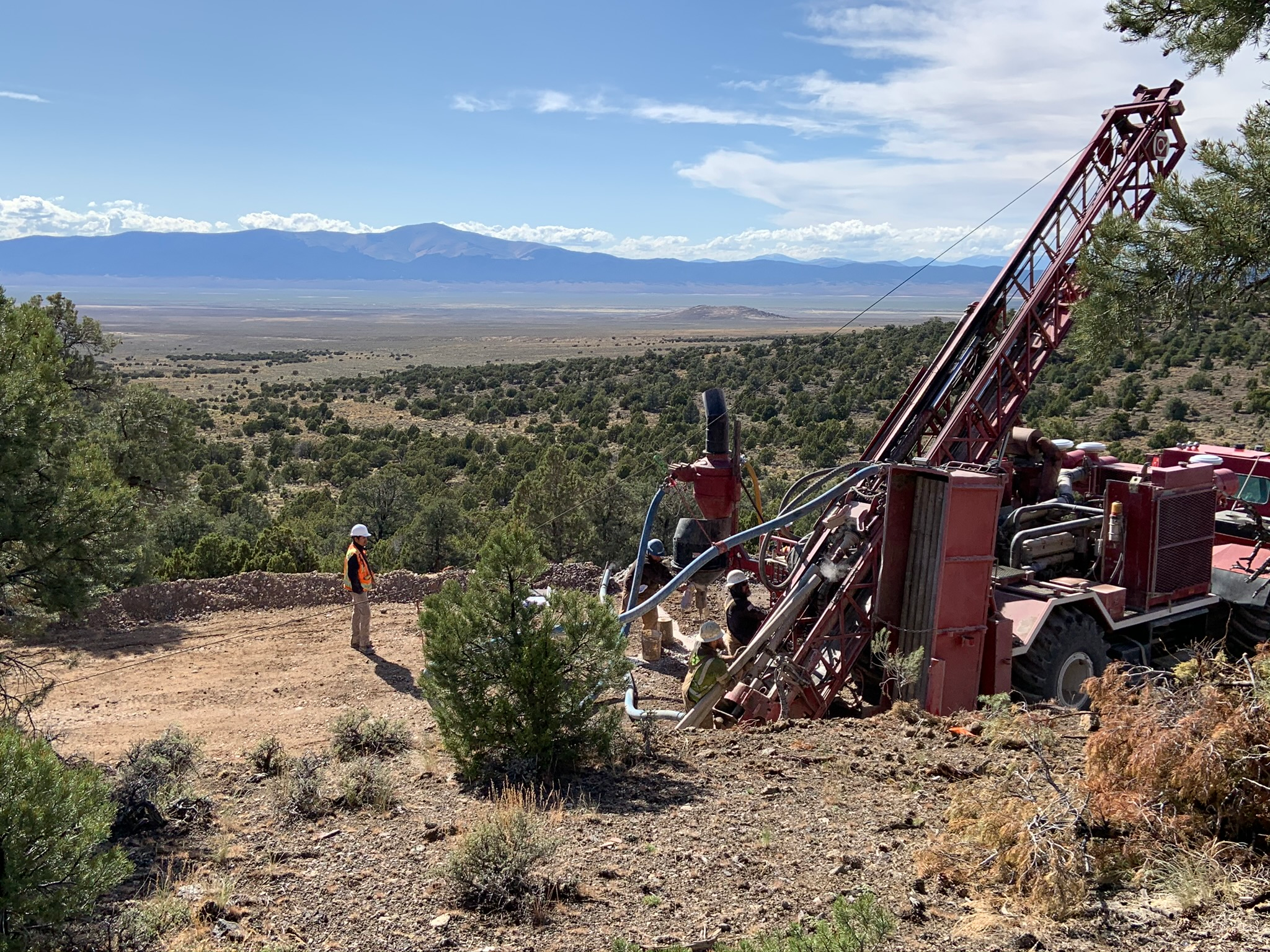
Ridgeline’s silver-zinc-lead-gold Selena project in east-central Nevada. Credit: Ridgeline Metals
At Selena, earlier drilling in the Chinchilla zone cut 32.5 metres grading 153.42 grams silver per tonne, 2.51% lead, 1.6% zinc and 0.09 gram gold from 235 metres vertical depth. In the Juniper zone, drill hole LB-072 returned 7.7 metres at 725.2 grams silver, 1.5 grams gold, 1.3% lead and 0.9% zinc from 15.5 metres depth.
Ridgeline is using geophysics, mapping and drilling to test whether those intercepts belong to a broader carbonate replacement system. Selena lies about 1 km west of the Butte Valley porphyry and skarn project, which Ridgeline interprets as the source of the fluids that mineralized its property.
South32 can earn 60% of Selena by spending at least $10 million over an initial five-year term and increase its interest to 80% by spending another $10 million. Ridgeline remains the operator and also holds the Coyote gold and Big Blue copper-gold projects in Nevada.
Ridgeline Minerals had a market value of about C$33 million at print time.
Tectonic Metals
Tectonic Metals (TSXV: TECT; US-OTC: TETOF) is targeting an initial gold resource in the first quarter of 2027 at Chicken Mountain, the most advanced target at its Flat project in southwestern Alaska. Drilling is also testing Black Creek, a second centre of gold mineralization about 6 km northeast.
At Chicken Mountain, drill hole CMD26-036 cut 30 metres grading 1.4 grams gold per tonne from 183 metres depth, Tectonic reported in September. A deeper interval returned 118.1 metres at 0.51 gram gold from 270 metres to the end of the drill hole. The results extended one of six higher-grade corridors to more than 300 metres vertical depth.
At Black Creek, drilling reported in August cut 21.3 metres at 5.09 grams gold, including 6.1 metres at 17.34 grams. Another drill hole returned 57.9 metres at 1.89 grams gold. Both ended in mineralization. The results followed last year’s first drilling at Black Creek, which cut 48.77 metres at 4.5 grams gold from surface.
Tectonic launched a roughly 40,000-metre program in May to support the Chicken Mountain estimate and test other targets. Flat covers about 404 sq. km, mainly on land owned by Alaska Native regional corporation Doyon, one of Tectonic’s largest shareholders. The property lies about 40 km northeast of the Donlin gold project.
Tectonic Metals had a market value of about C$241 million at print time.
Be the first to comment on "Spotlight: Four US juniors drill for scale – Part 2"