
Mongolia, in the vast Central Asian valleys, is at the dawn of an enthralling geological and mining boom.
Geological surveys and exploration conducted in Mongolia up to the early 1990s resulted in the discovery of more than 6,000 mineral deposits and occurrences. Of these, roughly 5,000 mineral occurrences are resting untouched, awaiting detailed exploration.
Mongolia occupies a territory of 1.6 million sq. km, which has recently been fully covered by geological mapping at a scale of 1:200,000. However, only 20% of the total area is mapped at 1:50,000, and about 70% is covered by aerial geophysical surveys. This all suggests that Mongolia offers enormous opportunities for mineral exploration.
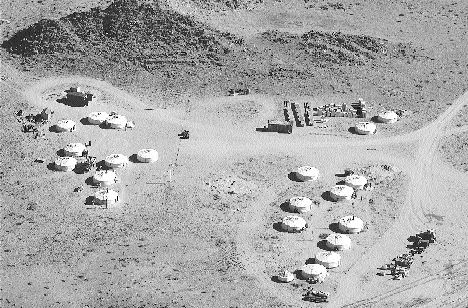
Those who enter the country first are likely to make discoveries. One of the vivid examples of such a rewarding venture is the investment and exploration done by
To date, the approved resources of Mongolia (omitting those of Oyu Tolgoi) stand at:
— 8 million tonnes copper;
— 240,000 tonnes molybdenum;
— 3 million tonnes lead/zinc ore;
— 10,000 tonnes tin;
— 146.8 tonnes gold;
— 10,000 tonnes silver;
— 453 million tonnes iron;
— 50,000 tonnes uranium;
— 70,000 tonnes tungsten;
— 200,000 tonnes graphite;
— 18 million tonnes fluorite;
— 2.4 billion tonnes phosphorite;
— 4.8 million tonnes zeolite;
— 1.3 million tonnes mineral paints; and
— 400,000 tonnes of bitumen.
In 2002, the government of Mongolia adopted a Mineral Sector Policy Document which outlined policies and goals to be pursued in the sector in the coming few years. The government envisages increasing public financing of geological mapping by 15-20% annually. The ultimate goal is to have 30% of the total land area of Mongolia mapped at a scale of 1:50,000 by the year 2010. This will certainly create a fertile soil for private entities to engage in more detailed commercial exploration projects.
The transition to a market economy, combined with economic liberalization efforts, has resulted in an inviting environment for companies entering the exploration and mining sectors. Over the past decade, gold production increased by 15 times, copper ore extraction increased by 30%, and production of fluorite concentrate rose by 15%. Those increases made gold, copper and fluorite the leading sectors in terms of volume of investment and output. Owing to underdeveloped infrastructure and lack of mineral processing plants, Mongolia consumes coal at its thermal power stations only, and other minerals are being exported upon primary dressing.
Today the minerals sector accounts for half the country’s total industrial output and, on its own, provides more than 60% of the total export revenues. Of this, 83-87% of export revenues originate from copper and molybdenum concentrates, whereas fluorite accounts for 10-12% of the revenues, and gold and copper metal contribute the rest.
Mongolia produces 1% of the world’s copper output and ranks as the 15th- to 16th-largest copper producer. It also produces 1.2% of the world’s gross molybdenum production, ranking 10th in the world, and 4.1% of the world’s fluorite output, ranking fourth. Mongolia’s market share for gold production stands at modest 0.42%.
Domestic and foreign investors are working hard to put three other mines into operation in the near future: zinc at Tumortoin Ovoo, iron at Tumortoi, and a hard-rock gold mine at Tavtyn.
A large-scale project is under way to develop a mine at the Oyu Tolgoi copper-gold deposit. Discovered by Ivanhoe Mines in southern Mongolia, the deposit is one of the world’s largest. Establishment of this mine shall give a strong impetus to the development of infrastructure, which will lead to the active development of the Tavan Tolgoi coking coal deposit and the Tsagaan Suvarga copper deposit. Tavan Tolgoi possesses 5 billion tonnes of reserves of metallurgical coal, and it is ideally positioned to enter Chinese and South East Asian markets.
The geographic merits of Mongolia duly attract investors from the largest mineral consumers in the Eastern Hemisphere, such as China, Japan and Korea.
Upon analyzing the current state of affairs in Mongolia’s minerals sector and observing foreign market trends and developments, the government of Mongolia declared its intention to ensure active and sustainable development of the mineral sector, and to have the sector account for 66.3% of Mongolia’s total industrial output and 31% of its gross domestic product.
The government policies for the minerals sector constitute the core departure point to ensure the country’s sustainable and lasting growth and prosperity. The Minerals Law, adopted by the parliament in 1997, enshrined the principle of “first come/first serve” in the licensing procedure. This has served as one of the major healthy economic signs to draw the attention of the world’s largest mining stakeholders and investors to the Mongolian mining sector, as it guarantees them a sustainable and favourable legal environment for long-term investment projects in Mongolia.
As a direct result of this policy, the number of exploration licence-holders has increased significantly, and the number of mining licence-holders rose by three times. Today more than 30% of Mongolian territory is covered by various exploration and mining licences. Of this, 20% of the mining licence-holders and 80% of the exploration licence-holders are fully or partially foreign entities. To this date, three companies with foreign investment have concluded stability agreements with the minister of finance and economy in accordance with the minerals law of Mongolia.
In addition to improving the legal environment, the government is working to refurbish the investment environment based on changes in the markets. As the market economy has become the rule of the day in Mongolia, the government is convinced that further enhancement of minerals legislation and efforts to upgrade the legal environment to internationally competitive standards will result in increased foreign investment.
The government is well aware of the importance of building mechanisms to encourage consultation with investors and of having their opinions reflected in the legal statutes, and also of enhancing the cohesion and consistency of the direct and indirect laws and legal documents that govern the sector.
Mongolia’s geology and mining sector are on the right track for development; however, a host of new issues and concerns need to be addressed and resolved. For instance, herders who lost their livestock in natural disasters and unemployed people have started engaging in manual and illegal mining, thus posing problems for legal licence-holders. In response, the government has begun drafting legislation to regulate matters arising out of illegal exploration and mining.
The recent boom in exploration activities in Mongolia helped many service-providers expand their businesses.
One fresh example is “Discover Mongolia,” an international mining conference and investors’ forum organized in September 2003 by private consulting companies and non-government organizations. This event was a huge success, and this year, the second such forum should attract into an even greater crowd.
By all indications, Mongolia seems to be on the eve of a major mining boom.
— The author is the general manager of Mine-Info Mineral Consulting, an exploration consulting firm based in Ulaanbataar.
Major Mineral Output of Mongolia
| 1992 | 1995 | 2000 | 2001 | 2002 | |
| Gold (kg) | 775.8 | 4504.0 | 11432.9 | 12059.0 | 10883.8 |
| Copper conc. (000 t) | 348.0 | 346.4 | 457.7 | 487.6 | 99.0 |
| Molybdenum conc. (t) | 2929.1 | 3906.0 | 2626.6 | 2797.0 | 1590.3 |
| Fluorite flotation conc. (000 t) | 97.2 | 120.4 | 111.4 | 127.3 | 86.1 |
| Fluorite met. conc. (000 t) | 42.9 | 13.1 | 87.4 | 76.6 | |
| Coal (000,000 t) | 4.922 | 5.057 | 5.000 | 5.200 | 5.400 |
Be the first to comment on "Mongolia poised to reap mining boom"