
Barrick Mining (TSX: ABX; NYSE: B) has given mine managers more responsibility in setting and meeting production targets after years of missed forecasts eroded investor confidence in the world’s third-largest gold miner by 2025 output, Barrick International CEO Sebastiaan Bock said.
Barrick had made a habit of issuing three-year production forecasts and resetting them a year later, hurting credibility, group CEO Mark Hill told Mining Forum Americas in Colorado Springs, Colo., in September. As Barrick prepares to float its North American gold business as American Barrick Gold (proposed NYSE: ABGC), Bock said the international operations he now oversees have collectively met or exceeded annual production guidance for seven straight years.
“A year ago, we worked with mine leaders to rebuild our guidance from the ground up, and we gave them more responsibility and accountability for meeting their new targets,” Bock said in emailed replies this month. “In 2027, investors should judge us by whether we continue to improve safety, meet our guidance, control costs, and deliver our growth projects on time and on budget.”
The landmark initial public offering, expected by early next year, will give investors direct exposure to Barrick’s interests in Nevada Gold Mines, the Fourmile gold project in Nevada and Pueblo Viejo in the Dominican Republic. The Toronto-based parent intends to retain majority ownership of the new company while developing its international gold and copper assets, including the Lumwana expansion in Zambia and the delayed Reko Diq project in Pakistan.
Barrick shares more than doubled last year but have shed about 26% since closing February at $69.21. They gained 3.7% to $51.70 apiece in Toronto by mid-Friday, valuing the company at about $84 billion. The stock is down 11% from a year ago.
Q&A
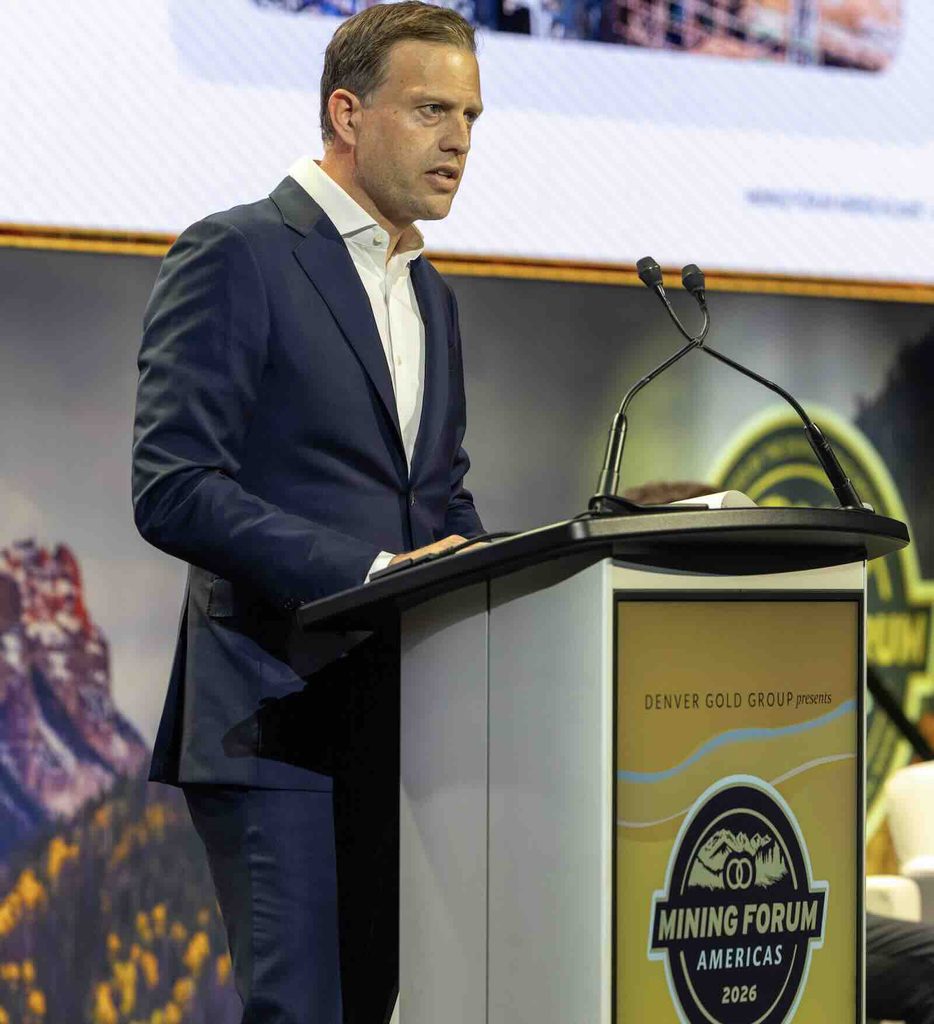
The Northern Miner managed to catch up by email with a busy Bock, who was appointed in August, for a brief Q&A on his priorities for 2027. While he wasn’t permitted to discuss the IPO, he addressed everything from rising copper costs and mine safety to the challenges of delivering multibillion-dollar projects.
The Northern Miner: Mark Hill has made rebuilding Barrick’s credibility a priority. Within your international business, what has changed in mine planning, management accountability and incentives? Which measurable results should investors judge you on in 2027?
Sebastiaan Bock: A year ago, we worked with mine leaders to rebuild our guidance from the ground up, and we gave them more responsibility and accountability for meeting their new targets. That approach is consistent with Barrick’s historical culture of decentralization that drove our past successes, and it is working.
We have also advanced our growth projects, Lumwana most importantly, on time and on budget. And we did it all while prioritizing and improving safety, because we know from experience that a safe mine is a productive mine.
Barrick International — our portfolio combining Barrick’s Africa & Middle East and South America & Asia Pacific regions — remains on track to meet full-year guidance and has met or exceeded production guidance for seven consecutive years. In 2027, investors should judge us by whether we continue to improve safety, meet our guidance, control costs, and deliver our growth projects on time and on budget.
Copper costs
TNM: Barrick’s third-quarter copper all-in sustaining costs reached $4.52 per lb., against annual guidance of $3.45–$3.75. How much of the pressure reflects fuel and currencies, and how much reflects operating performance? What can you improve in 2027?
SB: The $4.52 per pound is a quarterly figure, and year to date we are at $4.05. As we said at our third-quarter results, we expect full-year copper costs at or very slightly above the top of the range. The principal drivers were higher diesel prices, local currency appreciation, higher royalties linked to stronger copper prices, and additional waste stripping.
Operating factors also contributed, including Lumwana bringing a planned mill reline forward to late September, which deferred higher-grade ore to October and lowered [Barrick’s total copper] production from 56,000 to 50,000 tonnes in the third quarter. Full-year production guidance of 190,000 to 220,000 tonnes is unchanged.
Safety
TNM: What are the biggest remaining challenges in safety across your operations, and what specific changes have you introduced? What measures will show whether those changes are working in 2027?
SB: Safety is Barrick’s number one priority globally. Our recordable injury frequency is improving, and the principal remaining challenge is severity. Leaders now verify critical controls directly in the field. They completed more than 24,000 verifications in the third quarter, of which 79% of the at-risk conditions identified were resolved on the spot.
We have invested more than US$90 million in safety technology, including automation, vehicle monitoring systems, safety reporting software, and AI-based analytics. In 2027, progress will be measured by TRIFR [total recordable injury frequency rate] and lost-time injury frequency each quarter, and by the quality of our verifications.
Lumwana
TNM: The Lumwana expansion in Zambia remains scheduled for first copper at the end of the first quarter of 2028. Which construction milestones must you meet in 2027, and what poses the greatest risk to the budget or timetable?
SB: Lumwana is an exciting growth project for us, and it is progressing well. The project remains on budget and on schedule for first copper at the end of the first quarter of 2028. All major long-lead equipment has been procured. The mill building, which sits on the project’s critical path, remains scheduled for completion this quarter.
In 2027, the focus moves to mechanical installation, the start of commissioning, and the ramp-up of mining. As with any project of this scale, our priority is disciplined execution. We have an experienced team, which knows to plan early for power, equipment, and logistics. We expect the expansion to double Lumwana’s copper production.

Reko Diq
TNM: With development slowed and the Reko Diq copper-gold project in Pakistan under review, what conditions must be met before work can accelerate? When do you expect to provide a revised assessment of costs, financing and the production timetable?
SB: In April we slowed development and extended our review in light of the security situation in the region, which we are assessing alongside capital requirements, financing, scope, and timeline.
We expect to provide an update on the review by mid-2027. Any acceleration will depend first on the security environment and then on a financing plan and capital estimate in which we have full confidence. We continue to regard Reko Diq as one of the world’s largest undeveloped copper-gold projects.
Operating reliability
TNM: North Mara in Tanzania, Veladero in Argentina and Porgera in Papua New Guinea have faced different operating disruptions this year. Which problems have been resolved, and what changes will make their production plans more dependable in 2027?
SB: Every operation faces its own distinct challenges. For example, Veladero and Porgera were affected by weather events. Severe winter storms at Veladero temporarily suspended operations on several occasions during the third quarter, and water shortages associated with El Niño reduced plant operating rates at Porgera.
At North Mara, local grid instability affected underground performance and plant run-time. We are addressing it through multiple projects, including a STATCOM [voltage stabilizer] installation expected to be completed by mid-2027. Production at North Mara rose 6% from the second quarter to the third, and we expect to increase mining of higher-grade open pit material in the fourth quarter.
While weather-related disruptions affected Veladero and Porgera, stronger performances from Loulo-Gounkoto, Kibali, Bulyanhulu, and North Mara have kept Barrick International on track to achieve its full-year production guidance.
Be the first to comment on "Barrick gives mine managers more say on targets"