
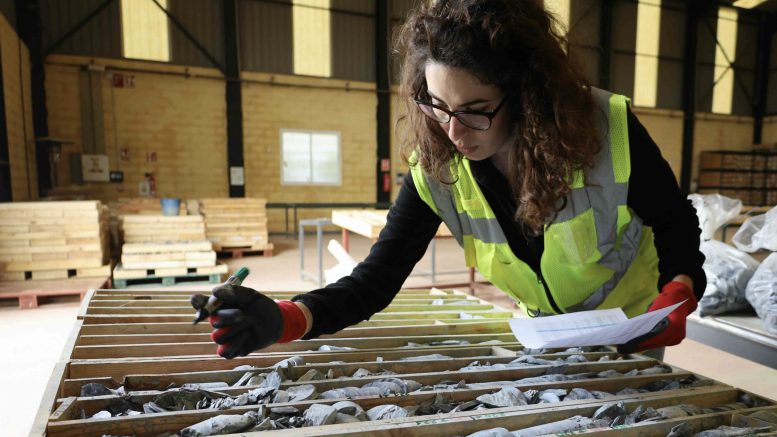
Pan Global Resources (TSXV: PGZ; US-OTC: PGZFF), led by former Rio Tinto (ASX, LSE, NYSE: RIO) exploration director Tim Moody, sees neighbouring plants as a potential route to copper production in a Spanish belt mined for millennia.
The Vancouver-based explorer’s La Romana deposit holds measured and indicated resources of 32.4 million tonnes, but its ambition is to build a resource base exceeding 100 million tonnes across the broader Escacena project in Andalusia’s Iberian Pyrite Belt.
“We actually think there is more value in doing what we’re calling an optionality study,” rather than a preliminary economic assessment, the President and CEO told The Northern Miner at the Mining and Minerals Hall conference in Seville. “So, looking at the benefits of things like ore sorting.”
The approach could give Pan Global a route towards development that takes advantage of the region’s existing mining infrastructure. However, it hasn’t demonstrated economic viability, and exploration permits remain outstanding for newly awarded ground that Moody sees as central to reaching a larger scale.
Ore transport
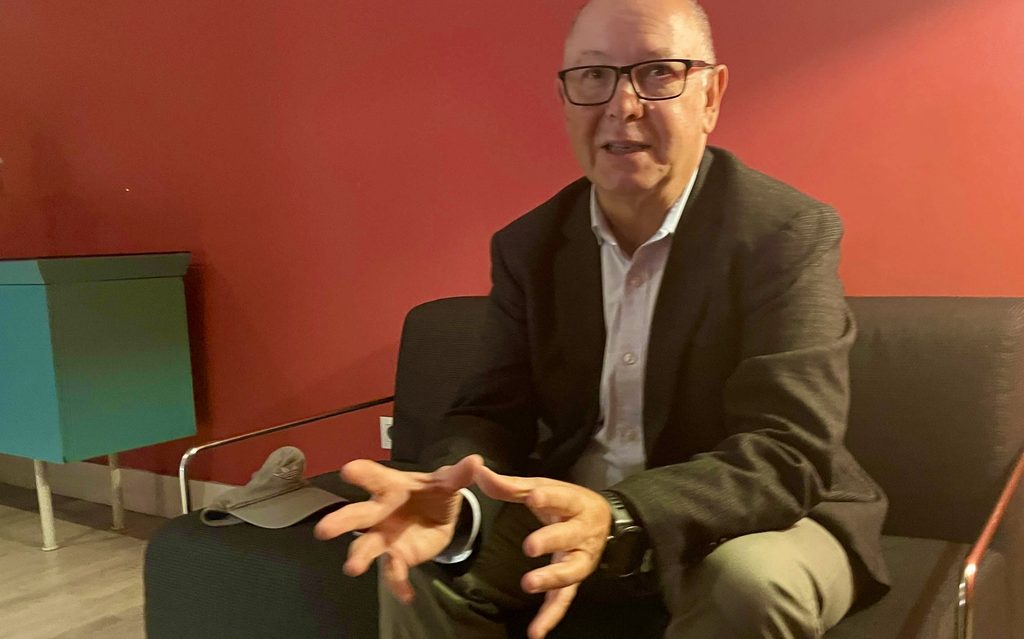
Escacena, about 35 km northwest of Seville, adjoins Grupo México’s (BMV: GMEXICOB) Los Frailes development and lies near Atalaya Mining’s (LSE: ATYM) Riotinto operation. Moody said trucking or conveying material to another operator made more sense at La Romana’s current size than building a standalone plant.
The Iberian Pyrite Belt’s concentration of giant volcanogenic massive sulphide deposits gives Pan Global a strong geological starting point, Moody said, pointing to Riotinto in Andalusia and Boliden’s (Nasdaq Stockholm: BOL) Neves-Corvo in Portugal. Despite thousands of years of mining in the belt, La Romana remained concealed beneath younger rocks until Pan Global’s discovery. Tin accounts for an estimated 15% to 20% of its metal value.
Ore sorting, which separates mineralized material from waste before processing, could make the deposit more attractive to neighbouring producers by reducing the material needing transport. Pan Global wants to establish whether it works and how much value it could add before deciding its next study, he said.
The confidence of its resource estimate could allow the company to move directly to a prefeasibility study, Moody said. He gave no timetable for that step.
Metallurgical advantage
La Romana’s measured and indicated resource grades 0.37% copper, 0.027% tin and 1.7 grams silver per tonne, containing 119,500 tonnes copper, 8,800 tonnes tin and 1.7 million oz. silver. The estimate, effective last December, also includes inferred resources of 4 million tonnes grading 0.4% copper, 0.0071% tin and 1.4 grams silver per tonne, containing 15,800 tonnes copper, 300 tonnes tin and 200,000 oz. silver.
The copper grade alone understates the deposit’s appeal, Moody argued. Near-surface mineralization, simple geometry and clean concentrates could help control mining, processing and transport costs.
Copper tests reported 88% recovery and concentrate grades of up to 32.5%. Moody said average concentrate grades were closer to 29%, compared with roughly 20% regionally.
The company is drilling the Cañada Honda deposit, which hosts 5 million inferred tonnes grading 0.65 gram gold and 0.14% copper, containing 104,000 oz. gold and 6,800 tonnes copper. Most of the larger exploration target remains untested, Moody said.
The bigger opportunity lies in Escacena South, ground awarded through a public tender last year. Moody said its untested targets could support discoveries on a scale comparable with established operations in the belt, although exploration success remains uncertain.
Permits
Pan Global had budgeted to drill there this year but was still waiting for the permits in October. Moody hopes to have crews on the ground before year-end, with drilling possible within a couple of months of the permits being granted.
Spain awarded the company a €250,000 (C$400,000) exploration grant this month for drilling, geophysics and related work. That sum could theoretically cover five deep drill holes, Moody said.
The country’s support nevertheless needs to be matched by better-resourced regional mines departments to process exploration permits faster, Moody said. Delays make it harder for companies to plan their drilling budgets.
Financial backing also came from Alpayana, which invested C$7.2 million in June, increasing its stake to 19.6% at closing. Moody described the holding as an investment, without a board seat or anti-dilution rights.
Pan Global has more than $7.1 million (C$10 million) in cash, Moody said. The company has also held discussions with German, Dutch and Italian resource funds about potential investment, it said.
Pan Global shares were unchanged at C17.5¢ on Wednesday in Toronto, valuing the company at about C$71.7 million. They have traded between C11¢ and C25¢ over the past year.
Gold option
Meanwhile, Pan Global’s Cármenes project in northern Spain is providing another avenue for growth, although Escacena remains the company’s focus.
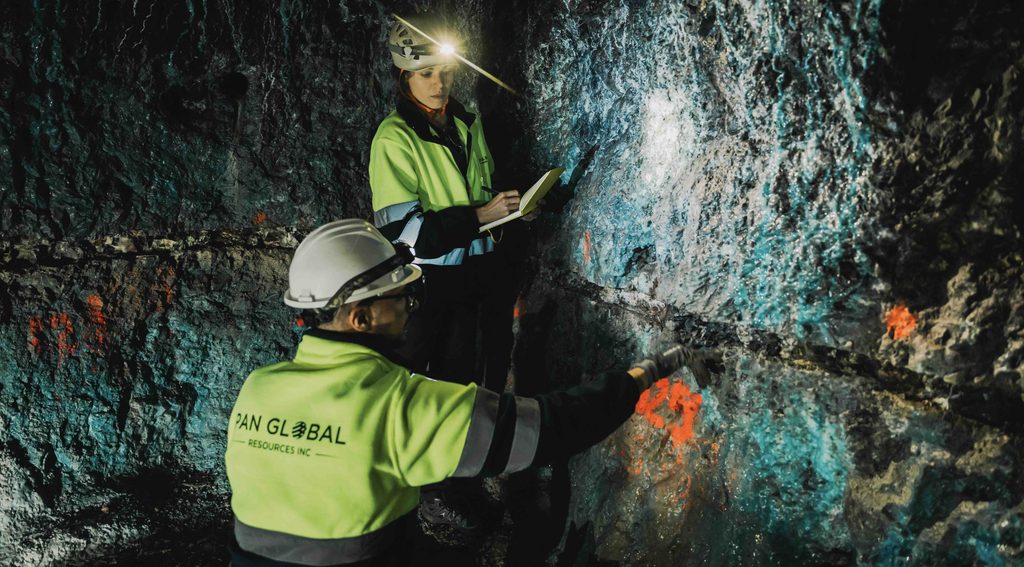
Results released Oct. 14 included 9 metres grading 7.29 grams gold in drill hole PVD18, starting one metre downhole, and 38 metres grading 1.53 grams gold in PVD17. True thicknesses remain undetermined.
With results from only 19 holes announced, the company is still establishing the geometry of the Providencia discovery. An initial resource could be about a year away, Moody said. A spinout is among the possibilities for the gold business.
Pan Global also won a tender for the Salamón gold project, 30 km east of Cármenes, although the final award remains subject to a competing bidder’s appeal.
For now, Moody sees the combination of established resources and untested ground as its attraction to larger miners.
“What the bigger companies are looking for is scale,” he said. “Obviously, that’s the first thing.”
Be the first to comment on "Spain: Pan Global eyes copper riches in ancient belt"