
Major miners have the money to expand but face shortages of skilled workers and contractors that threaten to delay new production and drive up construction costs, executives warned Sunday.
Mining and processing require about $2.2 trillion (C$3.1 trillion) in capital spending between 2025 and 2035, including exploration and sustaining investment, Global management consultancy McKinsey estimates. A separate McKinsey study of 58 projects from 2003–23 found average cost overruns of 37% and delays of 1.2 years, delegates heard at Mining Forum Americas in Colorado Springs.
“And then comes the real constraint, which is execution, capacity and capability,” said Peter Toth, Newmont’s (NYSE, ASX: NEM; TSX: NGT) chief sustainability and development officer. For well-funded producers, the challenge is finding people, engineering firms and partners to deliver projects, he said.
The construction squeeze threatens the supply growth governments want from mining just as stronger balance sheets give producers room to invest. It also makes buying existing mines more appealing – a choice that can benefit shareholders without adding the production needed for industrial expansion.
Global metals and mining companies should post combined revenue of about $3.6 trillion this year, McKinsey says. Its forecast margin for earnings before interest, taxes, depreciation and amortization – a measure of operating profitability – is 33%, up from 29% in 2025.
Rising valuations haven’t translated into comparable production growth. Among 16 large miners tracked by the consultancy, market capitalization climbed to roughly 5.4 times its 2015 level by the first half of 2026, while production increased only about 5%.
Copper accounts for 35% of projected capital requirements through 2035, compared with gold’s 17%. Latin America represents a quarter of total spending requirements, with North America accounting for another 12%, McKinsey data showed.
Building risk
Only 45% of projects in McKinsey’s historical sample finished on time. Fourteen per cent exceeded their original capital budgets by at least 100%.
McKinsey Partner Nathan Flesher contrasted that record with an average takeover premium of 30% across 375 transactions over the same period. Buying production can look attractive beside the risk of paying more, he said.
BMO Capital Markets analyst Matthew Murphy said investors will consider growth but remain wary of large projects, particularly when several companies are competing for construction resources.
“Is the company taking on something that could potentially kill the company if it doesn’t go well?” he asked.
Investors generally look three to five years ahead, Murphy said. That’s difficult to reconcile with mines designed to operate for decades and companies expected to demonstrate progress every quarter.
Toth said Newmont faced those questions ahead of a project decision at Red Chris in British Columbia. Understanding the orebody, preparing a sound feasibility study and securing experienced contractors are essential, alongside building strong relationships with First Nations and local communities.
Coeur Mining (TSX, NYSE: CDE) CEO Mitch Krebs warned against rushing engineering work to start construction or introducing unfamiliar technology into major projects. He favours teams that have worked together and understand local conditions.
Skills shortage
Krebs said higher prices had swapped one set of challenges for another. Filling skilled-trade positions at Coeur takes more than twice as long as filling other typical site roles, he said.
“I think it’s the Achilles’ heel of our industry,” he said of the workforce shortage.
Flesher estimated mining would need about 250,000 additional workers worldwide over the next decade, even as coal mining employment declines. Producers must also compete for the engineers and contractors needed to build mines.
Technology, immigration and greater female participation form part of the response, though there’s no quick fix, Krebs added. Women account for about 16% of Coeur’s workforce, he said.
Government attention has improved, with tangible permitting progress in Mexico, Krebs said. But lasting policy matters for investments that outlive individual administrations. A mine operating for 40–50 years could span roughly 10 successive governments, Toth noted.
The immediate constraint strikes at the heart of finding new resources – the drilling needed to find and define future mines.
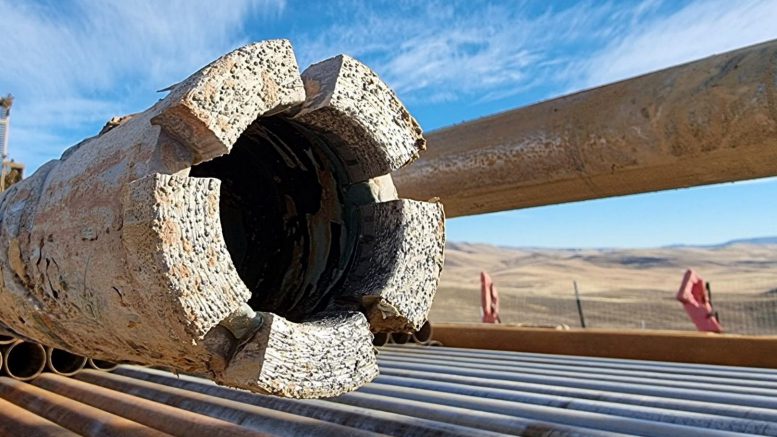
“Everybody wants to invest more in exploration, but if you can’t get drill crews to actually run the drills, where does that leave you?” Krebs said.
Be the first to comment on "Mining Forum: Miners have cash but lack the crews"