
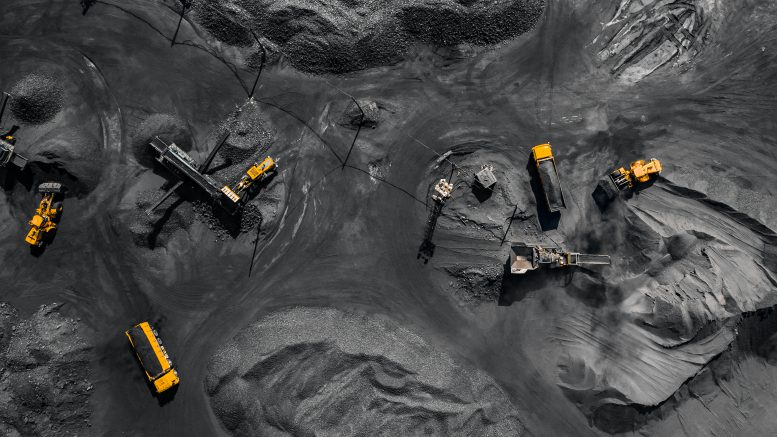
Coal investment will reach $180 billion (C$250 billion) this year, up 4% from last year and the highest since 2012, as the Middle East conflict pushes Asian countries to produce more coal at home, the International Energy Agency says.
Coal spending had already been rising for six years but the shock has hardened energy-security thinking in Asia, which had been buying 80% to 90% of Gulf oil and gas exports.
“Confidence in the reliability of transit through the Strait of Hormuz has been profoundly shaken,” the IEA said in its ‘World Energy Investment’ report last week.
“Mixed coking and thermal projects are also becoming more attractive, as weak thermal coal prices and slow development of alternatives to blast furnaces for steel production are strengthening coking coal demand,” the IEA wrote.
Chinese coking coal rose to a 19-month high on Monday after a provincial mine safety meeting vowed tougher enforcement, a sign that supply risk is now hitting prices as the Middle East conflict and Strait of Hormuz fears roil commodity markets, BMO said in a note.
Split trends
The diverging trends highlight a growing split in resource markets: governments are spending more on coal and energy security, while miners are pulling back on lithium, nickel and cobalt investments amid weak prices and oversupply.
Those concerns have been reinforced by damage to more than 30 energy facilities in the Middle East, including refineries, petrochemical plants, upstream oil and gas sites and two of the 14 liquefaction trains at Qatar’s Ras Laffan LNG complex, the report says. About 20 tankers have also been struck by missiles or drones.
Those two damaged Ras Laffan LNG plants leave about 17 billion cubic metres of annual capacity offline even if the Strait of Hormuz reopens, the IEA says.
Coal at home
More coal investment is one response to the war, the IEA says. The geopolitical crisis supports coal spending in the main Asian markets as countries keep existing coal-fired plants running longer and try to cut import risk.
Coal production investment this year will rise for both steam coal, up 5%, and coking coal, up 3%. Two-thirds of the more advanced projects in the pipeline target coking coal, even if many will also produce thermal coal.
China will account for about 65% of global coal supply spending this year. Its steam coal investment alone will top $100 billion, nearly double the level of a decade ago, as state-owned groups expand mines and modernize operations in Shanxi and Inner Mongolia. The IEA says those mine expansions and productivity upgrades underpin stable output through 2030.
Global investment
India remains the second-largest coal investor. The report cites Coal India and other groups as winning commercial mine auctions that add tens of millions of tonnes a year of capacity as New Delhi tries to cut imports. India is also lifting coal transport investment to $7 billion from $5 billion and expanding coal gasification.
Australia’s coking coal investment is to hit about $4.5 billion this year, the IEA predicts. Russia’s Elga second-stage project will add 25 million tonnes a year of coking coal capacity.
In North America, the United States and Canada have expanded the project queue to 15 mines with a combined 34 million tonnes a year of planned capacity.
South Africa has brought two projects online since 2024 and has another 12 with 31 million tonnes a year of capacity underway.
Battery metals lose
Critical minerals investment was moving the other way. Investment in the sector fell 9% last year, the first substantial drop since 2020, as miners cut spending on lithium, nickel and cobalt after several years of rapid growth. Battery metals took the hardest hit, with spending down more than 20% and lithium alone down about 40%, the IEA says.
Copper broke from that trend, seeing investment rising 8% as buyers kept backing the base metal’s role in electrification. Critical mineral exploration spending showed the pullback clearly, falling 10% last year, with lithium and nickel both down about 40%, while Australia and the U.S. posted the biggest regional declines.
M&A activity in the sector rebounded last year mainly because of Rio Tinto’s (ASX, NYSE, LSE: RIO) $6.3 billion purchase of Arcadium Lithium, but the IEA says battery-metals deal activity stayed weak beyond that transaction even as spending on copper assets doubled.
The agency blames weaker prices, oversupply, battery chemistry shifts and policy uncertainty. Add to that higher capital costs, weak price discovery and trouble securing long-term offtake all choking new projects outside dominant supply regions.
Lower emissions
The IEA underlines that far more money is going into lower-emissions energy than into fossil fuels.
Total global energy investment is set to reach $3.4 trillion this year, with about $2.2 trillion going to renewables, nuclear, grids, storage, low-emissions fuels, efficiency and electrification, versus about $1.2 trillion for oil, gas and coal.
Be the first to comment on "Hormuz shock drives coal to 14-year high"